

October 1st, 2026
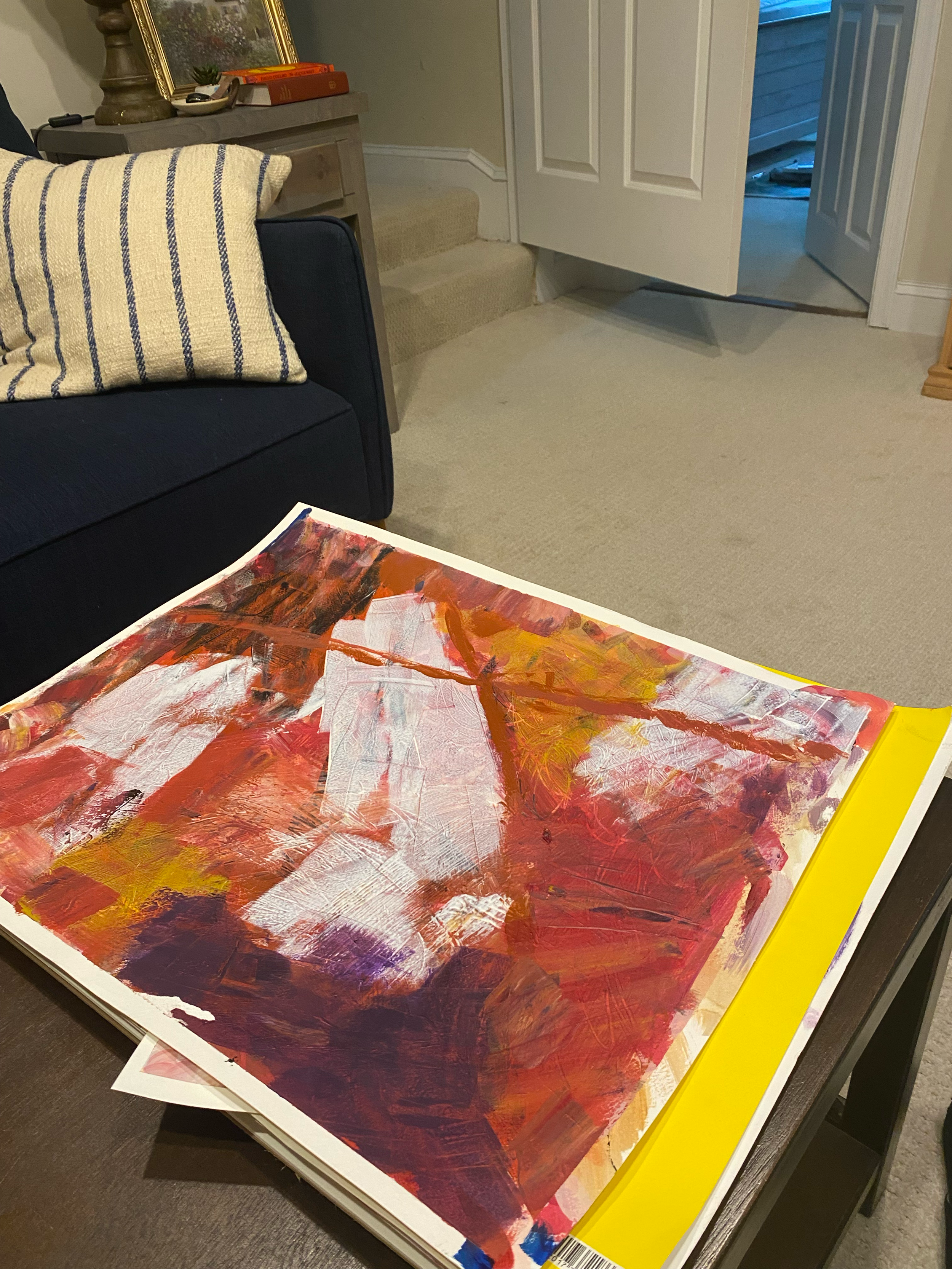
You Might Like It Better After It Dries
You might like the
Colors better once
The paint dries
It might grow on you
The strangeness of it
Might become endearing
The un-done-ness of it
Might suddenly look done
So don’t scrap it
Just cuz
You’re displeased
At first
Look at it a little bit longer
Hang it on the wall
Make friends
It might speak to you
It might become
Something you need
—Margaret Merle
September 1st, 2026
The Unembraced Artist Within
Art is creative work
Art flows from identity
Art is beautiful
Art is a gift
Art is free
Art is meant to be expressed and shared
Art is risk
~
Art needs safety
Art needs honor
Art needs collaboration
Art needs space & time
Art needs to emerge naturally
Art needs bravery
~
Art is glorious
Lately there has been lots of conversations for us with artists about creativity, art, spirituality of art…There seems to be disagreement on what creativity actually is—what art in its essence.
There have been many writings on the topic over the span of history and time…we don’t claim to know many of them, we only know each of our own experiences. As a teacher, I have also watched a few others’ experiences along the way as well.
The teacher heart longs for others to have parts of themselves unlocked. For many years, there were many parts of me locked up, waiting for the right time to be expressed. This is to be human. This is not a special phenomenon just for me. King Solomon once said, “For everything there is a season under heaven.” How true.
I don’t much care to have a staunch definition of these: art or creativity for myself—I just want to be able to actually “do it—” to create, to make, to do the thing of art. At Thy Name we want to simply have these parts of ourselves free—from personality, to wiring, to makeup—free to do what we were meant to do and express whatever that is the world.
From these conversations and explorations we offer you these thoughts, however incomplete, that you too may be set free from anything that keeps you bound from expressing the deep things inside you.
May you unleash the things that have been with you, waiting to be expressed—the groaning things— those things inside you that you were created FOR.
What is art?
First, we are all meant to create the thing that we were meant to create. What is it? How to find it? Where can it emerge? When is its time? Well, those are all for the artist to discern. That’s the curious, fun of it all!
Art flows out of identity. It cannot be separated from its creator. Every fingerprint of what was made is from the artist. The art was touched, considered, carefully crafted. If the artist questions herself, she is lost. If he cannot decide what he was made to do, he will be frustrated. The quest after identity is paramount. The freest artists I know are confident in their skin—they like who they are. They like what they make, even if no one else does. They feel a sense of call from their Maker or from their art itself and they follow... They don’t control. They discover. They watch. They pay attention. They listen. Of course, they use all their God-given senses. If something they’ve made is “undone” or “still in progress” they know it—including themselves. They might think they’ve made something from their most solid sense of self: and the following year, to their own surprise, they’ve made something even more expressive of what’s within. This doesn’t negate that they made the former with all the passion, security, and grounded-ness they had at the time of creation. That was real too. That was authentic to where they were; it was how much of themselves they knew then. That was enough.
Art is creative work. Art is much more than what we’ve decided to put on the shelves, in the schools, studios, or what the masters deemed glorious. It’s the making of a thing—not a copy or a craft, but an amalgamation of many-a-thing from the heart of a person in a brand new unique package, gifted into the world.
Art is beautiful. Even if it is grotesque in part, if there’s not some element of beauty in it—it’s simply an opinion. There are so many opinions and observations of evil that infiltrate the art world. Of course we could never “prove” all the things that one would find beautiful because each of us sees in part. I would not dare to claim that something was empirically beautiful or ugly from my own opinion—we’d probably have to check with every person in the world to decide! If one person can see some beauty from their angle (perhaps leaving out the psychopaths or possessed)—well, then, they can see it. So, it’s got some beauty to it.
Art is a gift. The communal aspect of art is so interesting. Because art has an intention, it moves towards a person, a group of people or the artist themselves. There’s a wonderful book I’ve seen on the topic: The Gift: Creativity and The Artist in the Modern World by Lewis Hyde. It reads much like an art history lesson on art as a gift over history and time through many cultures. It builds a strong argument—very interesting. Recommend.
Art is free. Even though art can be purposeful, it has no agenda. It evokes. It calls. It stirs. It creates. It opens up original thought. It creates curiosity. Often when I write something, I hardly have an idea of what it will say, do, be, or become. Of course there are “artistic stories.” Stories are planned and structured. They have an agenda. Surely with writing, there is a grand mixture of art littered into each carefully-crafted story. Some stories are pure art. Perhaps how these artful stories came to be started out following some sort of story structure because the artist’s fingerprint knows story…is story. The true artist’s story would have a purpose in mind upon embarkment, but simply not know what it would become until it became that. It would “happened upon itself.” It wouldn’t be tirelessly maneuvered propaganda. I believe art tells stories but I truly don’t believe it knows what it tells until it is finished. Just like a life story. Our stories are art. There is story in art because story is mapped onto the human heart but I don’t believe stories are always art…after all, Someone is the Author and Perfector of our stories.
Art is meant to be expressed and shared, even just with one person—even if that person is the creator himself. The Trinitarian view here would suggest that we are never alone in solitude, we are actually collaborating in the creation…in the sharing…in the making with the Father, the Son, and the Holy Spirit. Hence the idea of the “muse.” Even if you imagine your audience while creating—maybe you have something to say to them. They are with you in your mind. Maybe you imagine someone else with you, peering over your shoulder as you make. You’re not alone. This particular beauty has already been shared with one first set of eyes: your own. I’ve heard many artists say that some of the most sacred times they have are when they simply make art for their own enjoyment. It takes the “product” mentality out of the equation when this becomes a ritual. Here “product” is indicating things that are simply what we pump out for specific purposes. They don’t necessarily have creative power—they meet a need, but perhaps they don’t inspire, instruct, re-create. Perhaps there is no “aliveness” to them. These are products. And products have their place.
Art is risk. There are many obstacles to the artist. Many battles must be fought through. Mental, emotional, physical, environmental—you name it! There are sacrifices that are made. So when you honor an artist, those words won’t be wasted. There’s much that they had to face to make this. There was much to do, to question, to find, to reject.
What a thing to do! To participate in the communal work of partaking in our God-given identity to create what is imprinted upon our lives to create—to risk—to give—to share—to express! Those people who have spent their time and their lives doing this work, they are artists. We honor them. The tireless hours swimming upstream, risking shame, rejection, denial. They fought many dangers and foes—to birth what God called them to create. Everyone has the capability and the ability to do art. Perhaps some feel the call, perhaps only some answer it…there are creators in all of us.
Perhaps that part of you was once quieted. Perhaps part of you hid because someone said a harsh word to you early on, when your confidence was still not yet solidified. Perhaps, you’ve been marginalized and only think that certain aspects of the creative process are valuable—such as the editing phase, the vision casting phase…
May we have the bravery to unleash the depths of us into the world—at least to some degree—some new degree each day.
May we honor one another as we see these authentic expressions of self.
May we not silo ourselves into art classes, art cliques, or “creative” endeavors to feel the safety we need to express these deep things within the small moments of our everyday lives.
May we be gentle with one another, asking to see the beauty within. May shame be far from our lips, while honor takes its rightful place.
Curating a Culture of Honor In Groups, To Let Art Breathe:
The teacher sees that our brains don’t need any help evaluating or criticizing—oh no, we do that quite naturally. That’s the editorial part of us. We all have that too.
For some of us it’s a louder, stronger, or more developed gift. Creating a culture of honor in a classroom or group where it’s “safe to emerge” takes intention. For a while I experimented with classes to see if only allowing compliments and honor would lead to a false sense of self emerging. Maybe it would create little ego-maniacs or would squelch the much-needed-editor within.
Once the art has come to completion and it’s time to show and tell: here’s the thing—we’re honest. We don’t lie to one another. We just don’t bring harsh words into the picture. If we have something to say that’s kind, we say it. If we have something to say that’s true, we say it. If we don’t—we all see quite easily what we don’t prefer. We ask one another in the drafting process: do you like this or prefer this? Do you think this should be more that way or the other? We are open to feedback.
But once the creation has emerged…the artist has chosen, (with much intention at that)… the final result. We honor them. We close up shop on the collaboration. The creative feedback that the artist may take or not have taken: that was their choice. All of that choosing and evaluating belongs in the creating and editing process.
To my great delight, this culture of honor creates students whose God-given-talents emerge. It gave room for them to copy the excellent—and leave the rest. In this way, they actually do follow the best model in the room—often not the teacher. Often someone else brilliant who’s a bit more organized, precise or clever than the teach’. So, there’s room there for the best of the best to lead things.
It’s glorious.
—Maggie Dean, 2024